
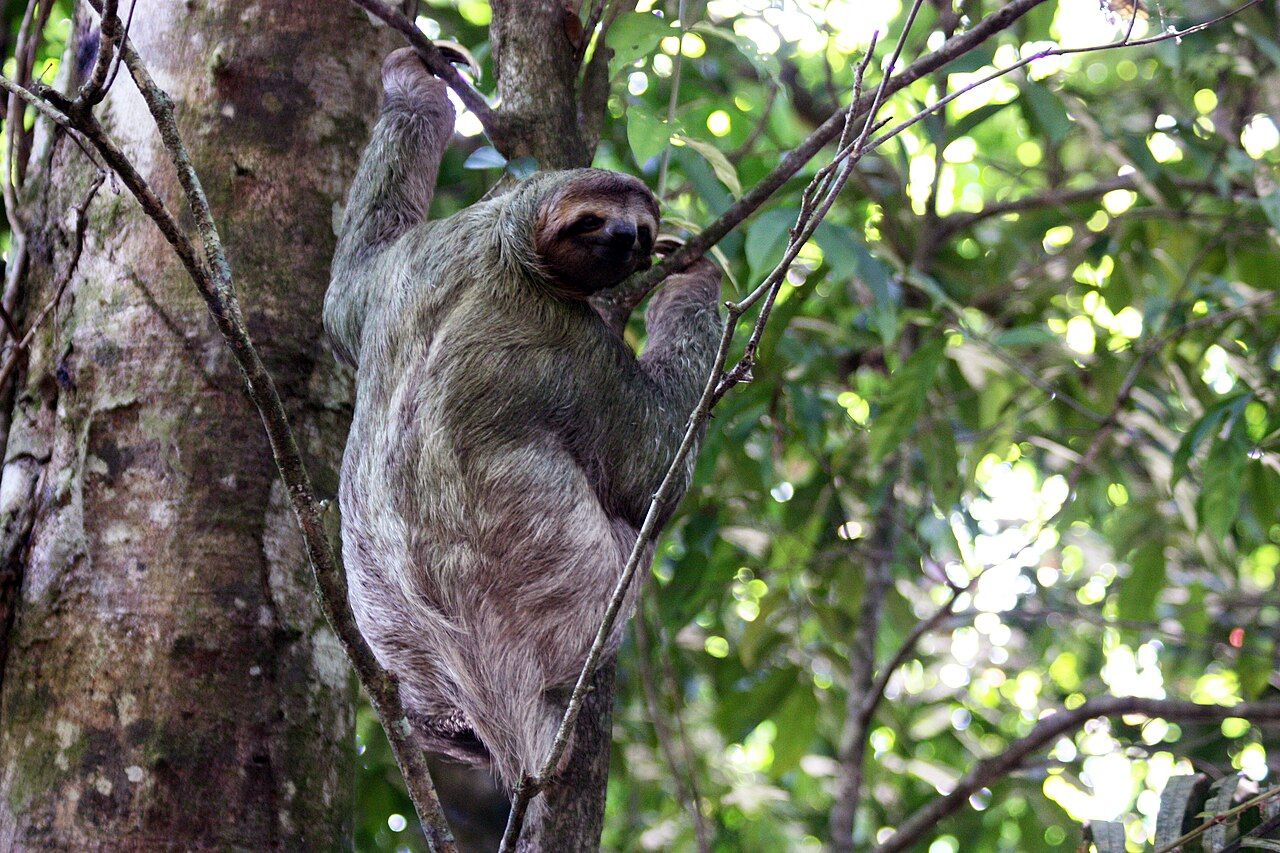
Costa Rica protects a large share of its land in parks and reserves, and wildlife is part of daily life even outside them: monkeys in roadside trees, sloths above car parks, iguanas on walls and frogs on every wet leaf after dark. That closeness is a gift, and it carries a responsibility. Most harm to animals from visitors comes from good intentions, and a few firm habits prevent nearly all of it.
Never feed wild animals
Feeding wildlife is against the rules in national parks, and offenders can be fined. More importantly, it hurts the animals. Human food makes monkeys, coatis and raccoons sick, rots their teeth and changes how they behave. Animals that learn to expect food grow bold, bite, snatch bags and gather near roads where they are hit by cars. White-faced capuchins at busy beaches are a sad example: some have learned to raid backpacks the moment a visitor turns away.
That includes indirect feeding: fruit peel, seeds and leftover rice on a picnic table teach animals the same lesson as a handout. Keep food sealed and out of sight, never leave rubbish behind, and do not throw scraps even if an animal looks hungry. In places like Manuel Antonio, where rules on food in the park are strict, they exist because of exactly this.
Distance and behaviour
The simplest test is behaviour. If an animal stops feeding, freezes, watches you or moves away, you are too close. Step back. Never corner an animal, block its path or chase it for a better photo, and keep at least a few metres from monkeys and larger animals, far more from crocodiles and anything with young.
Photography is no excuse for crowding. A zoom lens or binoculars bring animals close without changing their day, and a picture of an animal behaving naturally beats one of an animal fleeing. Turn off the flash, especially for nocturnal animals and birds on nests, and never tap, call or play recordings to get a reaction.
Snakes deserve special respect. Several venomous species share forest and farmland with people, the fer-de-lance the best known. Look before you grab a branch or step over a log, use a torch at night, and never try to move or touch a snake. If you see one on a trail, wait for it to leave or go around at a wide berth.
Sloths are not for holding
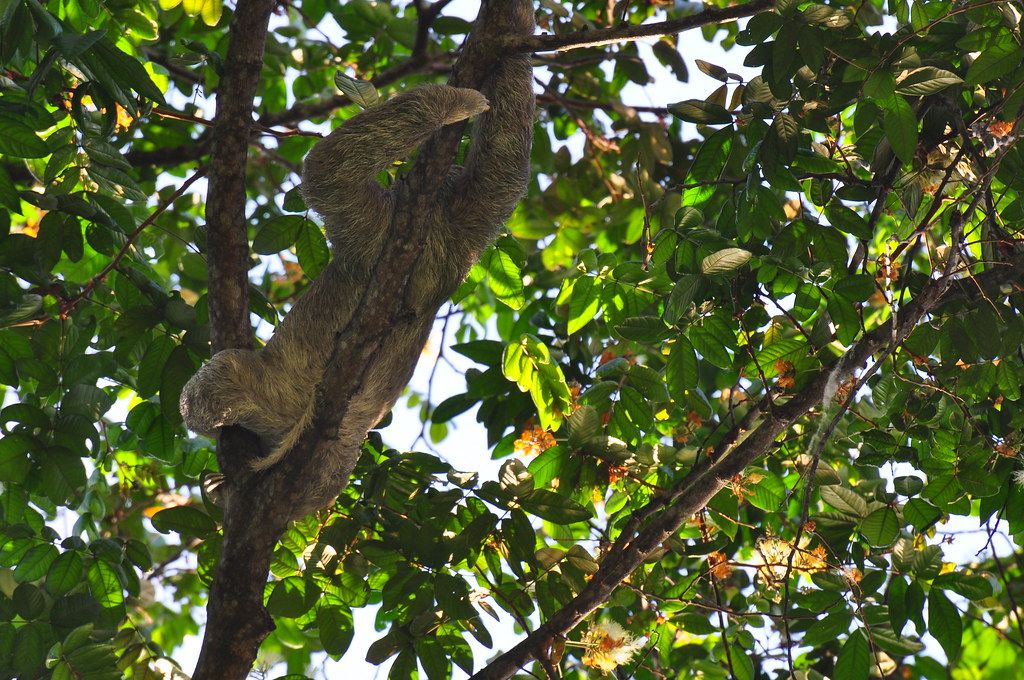
Sloths look calm and cuddly, which is precisely the problem. Being held is deeply stressful for them, and they have few ways to show it. Places that offer sloth photos or let visitors cuddle them are exploiting that, whatever they call themselves. The same goes for monkeys, toucans or any wild animal offered for a picture. Costa Rica has run public campaigns asking visitors not to take selfies with wildlife; follow them.
If you find a sloth on the ground or crossing a road, do not pick it up. Sloths come down to the ground regularly and are usually fine. If one is clearly injured, keep people and dogs away and report it to park rangers or the environmental authorities.
Night walks and turtle beaches
Night walks reveal another world: tree frogs, sleeping birds, tarantulas, stick insects and snakes. A good night walk moves slowly and talks little. Carry a dim torch, ideally with a red filter, and do not shine bright light into animals' eyes or use flash. No one, including a guide, should pick up frogs, snakes or insects for the group to photograph.
Nesting sea turtles are especially sensitive to light and noise. On beaches where nesting is monitored, night visits usually need a certified guide, in small groups, with no white light, no flash and strict distances. Stay behind the turtle, keep low and silent, and wait for the guide's signal. Never touch hatchlings or help them to the sea; they need that crawl. The details for the Caribbean are in Tortuguero's canals and nesting turtles.
At sea and on the reef
On boat trips to see whales and dolphins, boats should approach slowly, keep their distance, avoid cutting across an animal's path and limit their time nearby. If a boat chases or crowds animals, say so. When snorkelling, do not stand on or touch coral, keep fins away from the reef and use reef-safe habits such as covering up with a rash vest instead of heavy sunscreen. The reef at Cahuita has suffered enough already.
Guides, drones and what you buy
A certified naturalist guide carries official identification and should know the rules as well as the animals. In some areas, including the remote rainforest of Corcovado, entering with a certified guide is required. A good guide finds wildlife with patience and a telescope, not by baiting, calling with recordings near nests or handling animals. If yours does any of that, ask them to stop.
Genuine rescue centres exist and many do valuable work, but a real rescue centre focuses on returning animals to the wild and keeps contact with visitors to a minimum. If a place lets you hold, feed or play with animals, it is not putting them first.
Drones are restricted in national parks and disturb birds and monkeys. Finally, never buy wildlife or products made from it: turtle shell, coral, feathers, animal skins or live animals sold at roadsides. Trade in protected species is illegal and fuels the problem directly.
The reward for all of this is better wildlife watching. Animals that are not harassed behave naturally, stay longer and let you see what they actually do. That is worth more than any close-up.