
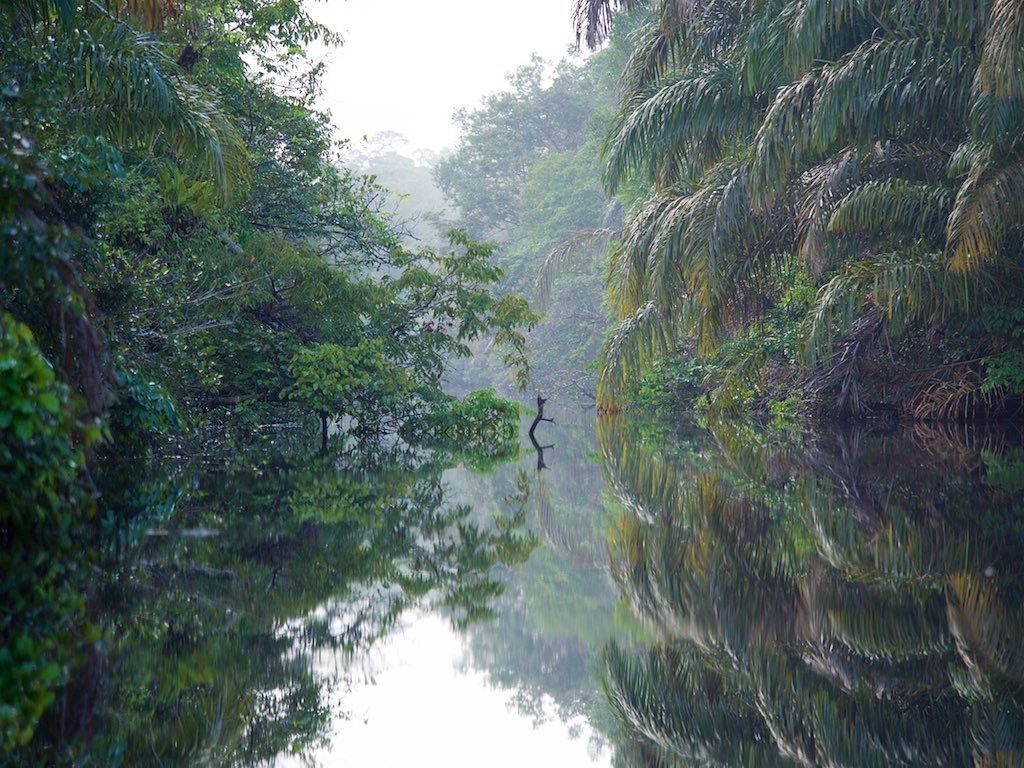
A village with no road
Tortuguero sits on a narrow strip of sand between a slow, dark canal and the open Caribbean, on the country's northeast coast. No road reaches it. You arrive by boat along the canals or by small plane, and once there you walk everywhere on sandy paths. The name means something like "place of turtles", and for generations the village has lived alongside the animals that give it that name.
Most of the land around the village is protected. Tortuguero National Park covers the long nesting beach, the canals and lagoons behind it, and a wide belt of flooded and lowland rainforest. It is among the wettest places in Costa Rica, with rain in every month, and the water level in the canals rises and falls with it.
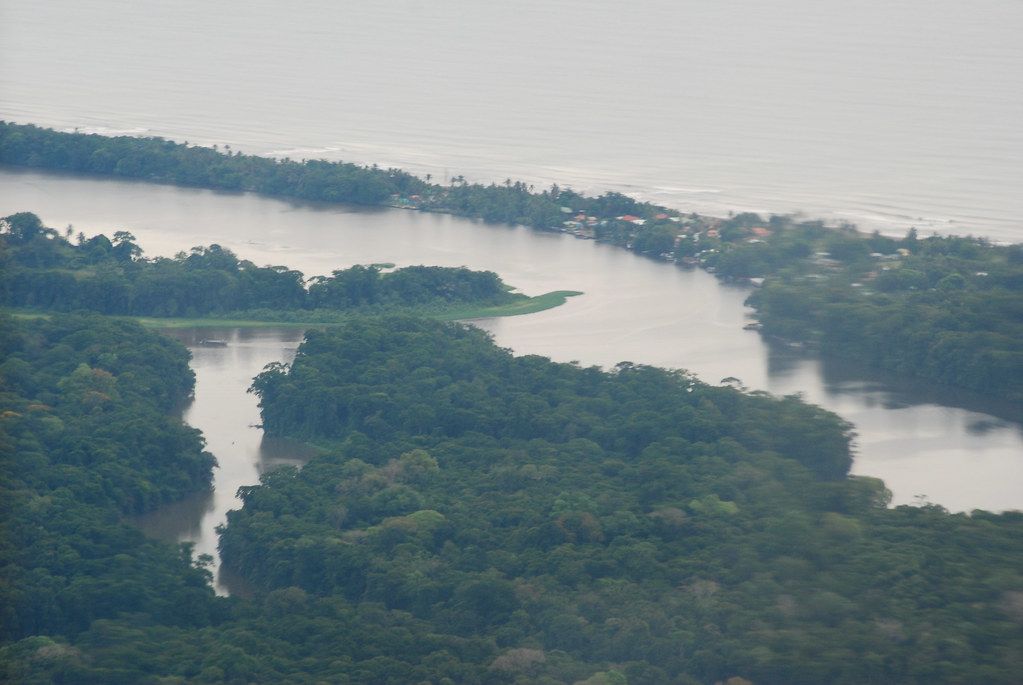
Life here moves at the pace of the boats. There are no cars, mornings start early with birds and howler monkeys, and most visitors spend their days on the water and their evenings, in season, on the beach.
The canals by boat and by paddle
The waterways around Tortuguero are a chain of natural rivers and lagoons, linked by canals cut along the coast in the last century. Inside the park, narrow channels wind under overhanging trees, and this is where the wildlife viewing is best.
Early morning is the time to go out, when the water is still and animals are active. Look for:
- Spectacled caimans and the occasional crocodile resting on the banks
- Howler, spider and white-faced capuchin monkeys in the trees
- Sloths, usually as a dark ball high in a cecropia
- Herons, egrets, kingfishers, anhingas and green ibis along the edges
- Basilisk lizards running across the surface of the water
Some smaller channels inside the park are closed to motors or open only to paddling or quiet engines, which is the best way to see them anyway. A kayak or canoe lets you slip into side channels without noise, and a guide who knows the water will find far more than you would alone. Park entry and canal permits are needed.
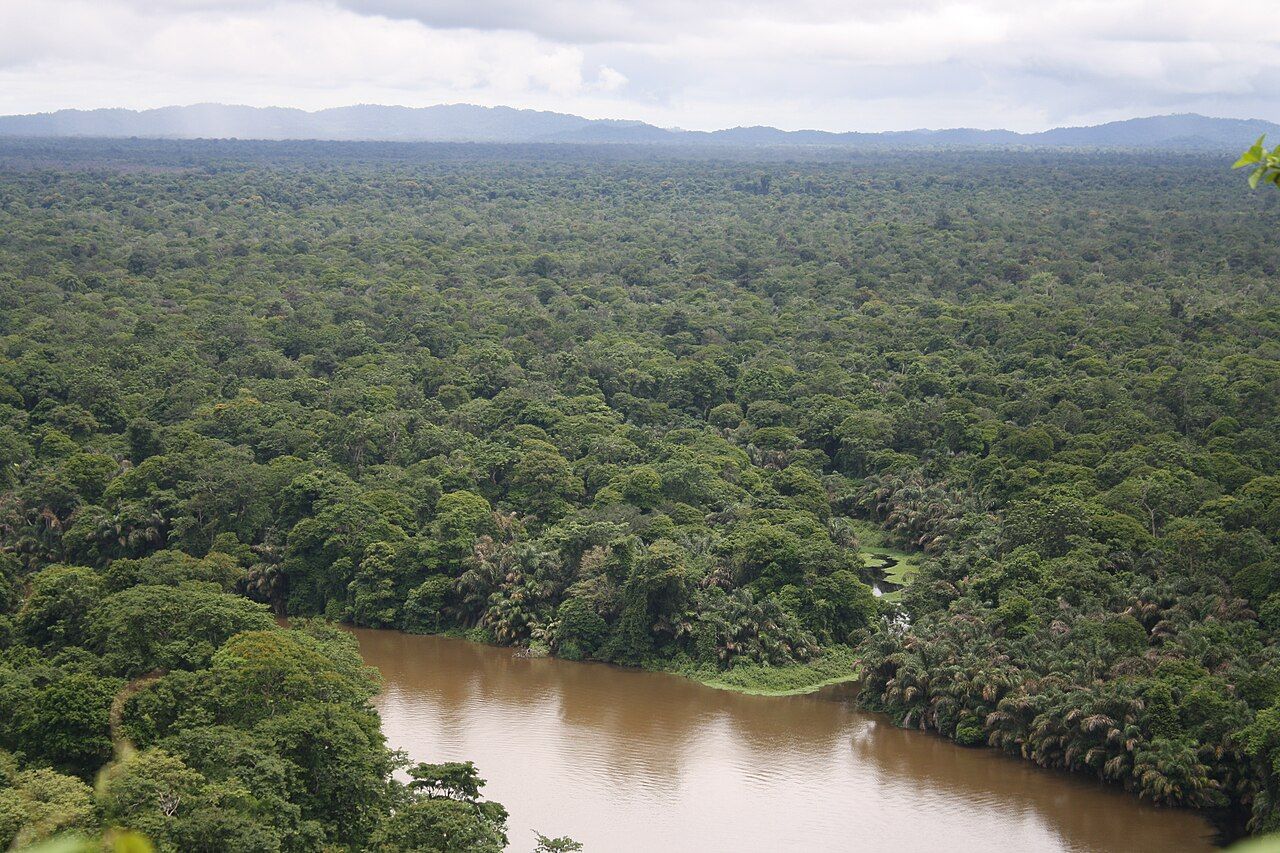
Motorboats on the main canals create wakes that erode banks and disturb wildlife. Choose trips that run at slow speeds, switch the engine off near animals and let the boat drift. Many visitors find that a two-hour paddle at dawn shows them more than a whole day of fast boat rides, and costs the forest far less.
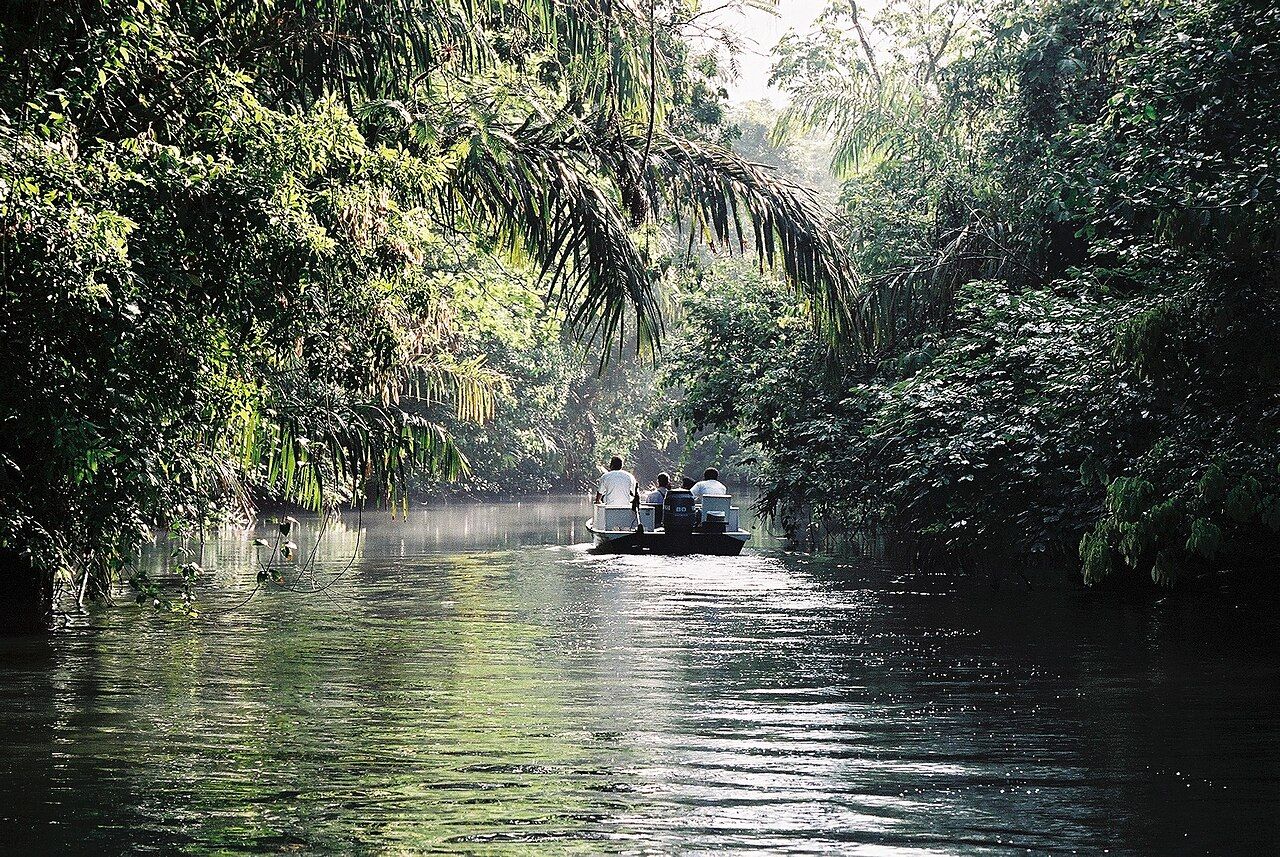
Keep your distance from animals, never ask a boat to chase them, and do not touch or feed anything. In the narrow channels, sound carries: talk quietly and switch off music.
Green turtles on the black-sand beach
Tortuguero is one of the most important nesting beaches for green turtles in the Atlantic. From roughly July to October, females haul themselves out of the surf at night, crawl above the tide line, dig a deep body pit and then a nest chamber, and lay around a hundred eggs before covering them and returning to the sea. The whole process takes an hour or more, and the same turtle may return to nest several times in a season.
Leatherbacks, the largest sea turtles, nest here in smaller numbers earlier in the year, roughly from March to May, and hawksbills appear from time to time. About two months after laying, hatchlings break out of the sand, usually at night, and head for the brightest horizon, which should be the sea.
Long-term monitoring and protection here helped turn green turtle numbers around after decades of heavy hunting for meat and eggs. That recovery depends on the beach staying dark and quiet at night, which is why the rules below exist.
Night rules on the nesting beach
During the nesting season the beach is closed to visitors after dark unless you are with a certified local guide on an official turtle walk. Groups are kept small and wait at the edge of the forest until a spotter finds a turtle that has started laying. Only then do they approach, quietly, from behind.
A nesting turtle that sees lights or movement too early will often turn around and return to the sea without laying.
- No torches, phones, cameras or flash on the beach at night; the guide uses a dim red light only when needed.
- Wear dark clothing and closed shoes, and skip insect repellent with strong scent if you can.
- Stay behind the turtle and well back, and never touch her, the eggs or a hatchling.
- Follow the guide's instructions exactly; they are there to protect the animal, not to give you a better view.
A nesting turtle that sees lights or movement too early will often turn around and return to the sea without laying.
Seeing a turtle is never guaranteed, even in peak season. A night without one is still a good night if the beach stayed dark.
Rain, river and sea
The sea at Tortuguero is not a swimming beach. Currents are strong, rip currents form along the whole shore, there are no lifeguards, and the river mouths are home to sharks. Walk the sand, but stay out of the water.
Rain can arrive at any hour. Pack a light rain jacket, a dry bag for the boat ride and quick-drying clothes. Insects are active at dawn and dusk, so long sleeves and repellent help. The village trails are flat, but the forest trails in the park are often flooded or muddy, and rubber boots are useful.
The village has no garbage trucks or easy way to remove waste, so everything that comes in by boat has to go out the same way. Carry a refillable water bottle, avoid single-use plastics, and pack out what you brought. Lights from buildings near the beach confuse hatchlings, which crawl toward brightness; if you sleep near the beach, keep curtains closed and outdoor lights off at night.
Tortuguero, slowly
From San José, the usual route is by road to the dock at La Pavona, beyond Cariari, and then by boat downriver to the village. Public buses connect San José with Cariari and on toward the dock, and public boats meet them; schedules change. Another route runs by boat along the coastal canals from Moín, near Limón. The journey is part of the trip: watch the banks, and keep a rain layer handy. For more on bus connections, see the story on driving and buses.
Plan at least two nights to make time for an early canal trip and, in season, a turtle walk. Stay with local businesses in the village where you can, hire certified local guides, and carry your rubbish out. If you want a lowland contrast on the way, the forest around Sarapiquí lies on the road between the mountains and the Caribbean plains.
Turtle seasons, park fees and visitor limits change from year to year.