
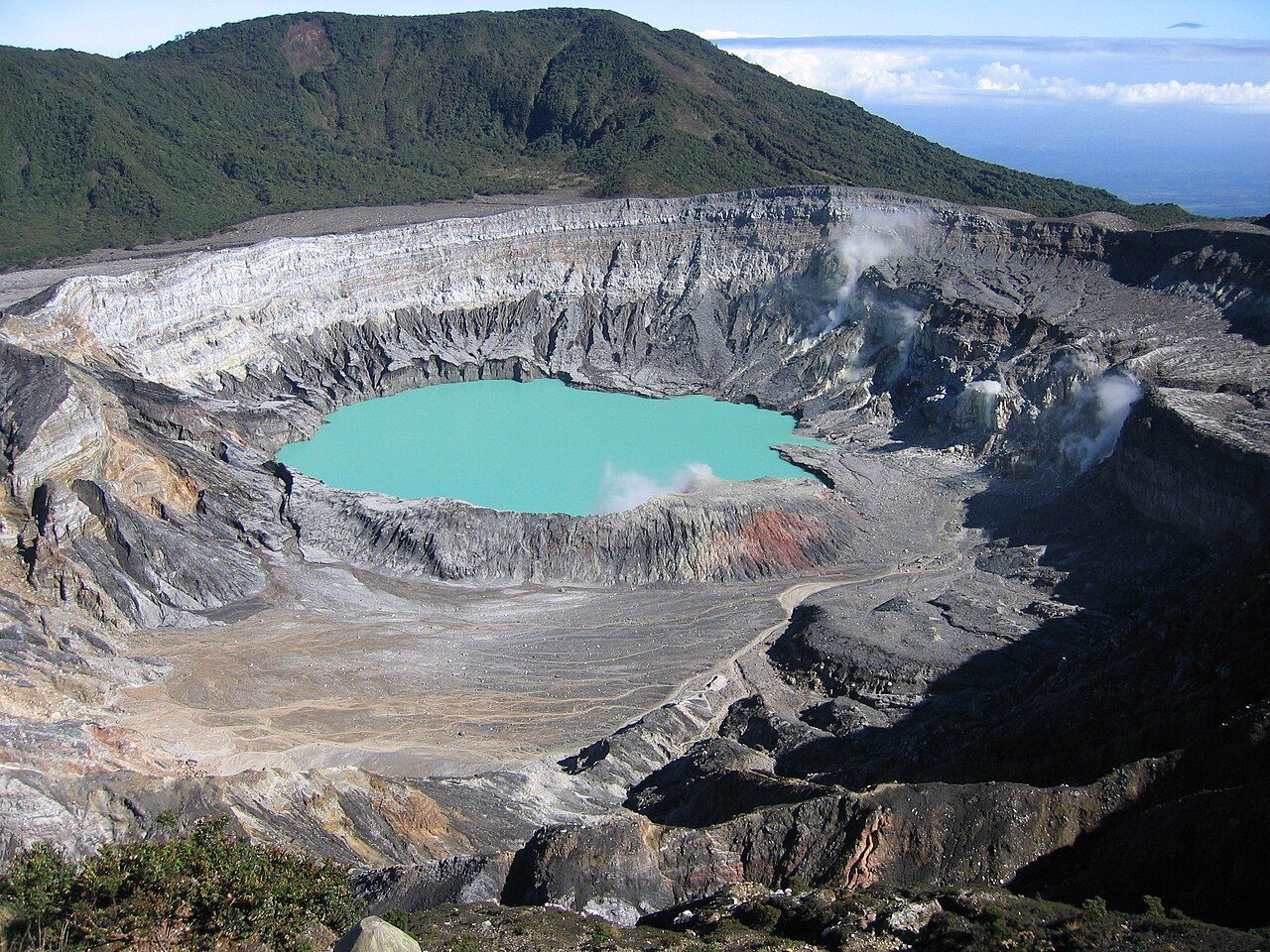
Two active volcanoes stand above the Central Valley within a morning's drive of San José. Poás, to the northwest, has one of the widest active craters on the planet. Irazú, to the east above Cartago, is the highest active volcano in the country. Both let you stand at a rim and look down into the working parts of a mountain, and both demand some planning.
The craters, briefly
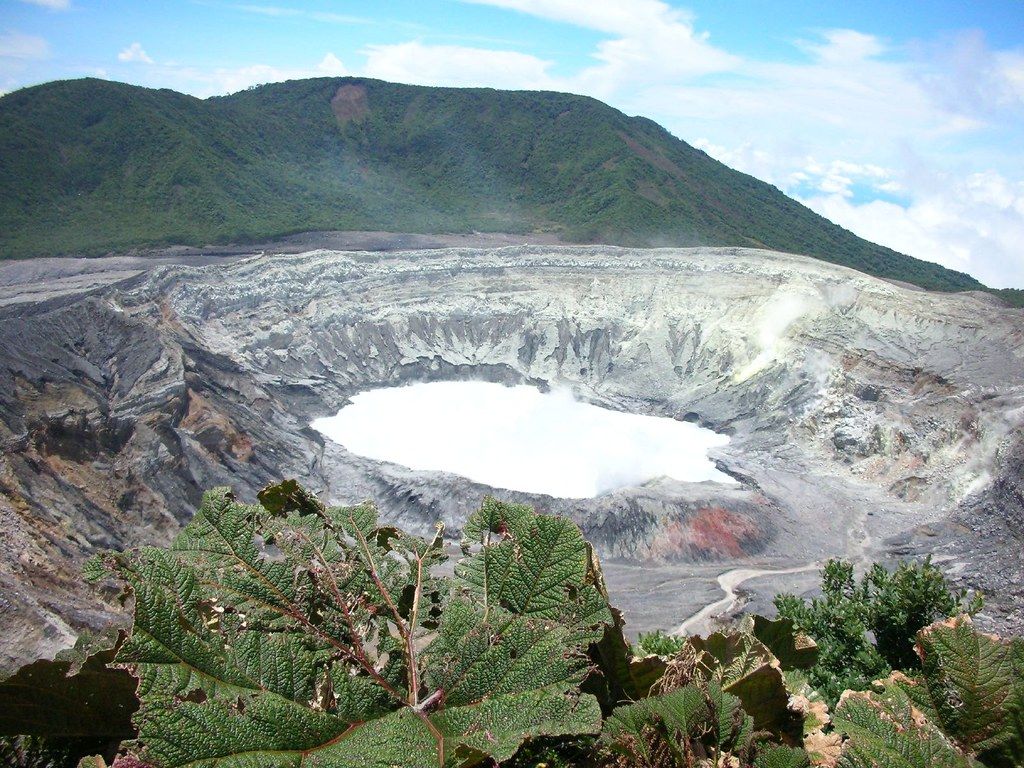
Poás reaches roughly 2,700 metres. Its main crater is more than a kilometre across and a few hundred metres deep, and at times it holds a hot, acidic lake that steams and changes colour from milky turquoise to grey. Eruptions have repeatedly emptied and refilled that lake. A second, cold crater lake nearby, ringed by cloud forest, is far calmer.
What you see on the day depends on the volcano's mood. Some visitors find a steaming turquoise pool, others a dry grey floor streaked with yellow sulphur, others only drifting gas. None of these is a wasted trip; each is a snapshot of a system that changes week by week.
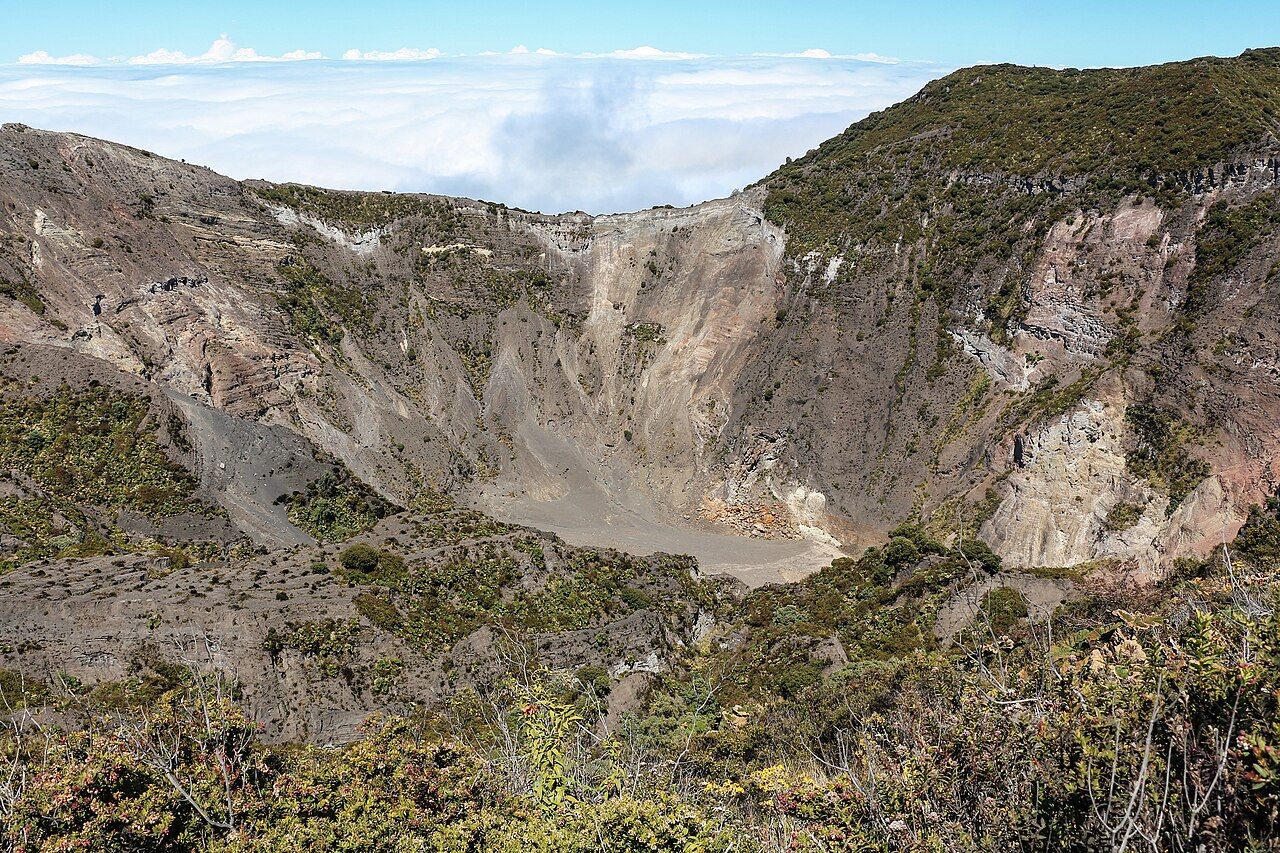
Irazú is higher, at around 3,430 metres, and colder. Its main crater is a steep, grey bowl, and a neighbouring crater has at times held a startling green lake that comes and goes with rainfall and activity. In the early 1960s an eruption here covered San José and Cartago in ash for months, a reminder of how close the city sits to living volcanoes.
Short paths lead from the parking area at Irazú along the rims of the main crater and its neighbours. The summit plateau is bare and grey, with low, tough plants that cope with wind and cold. On rare clear mornings the view from the high ground reaches far across the country.
Reservations, timed entry and closures
Access to both parks is managed. Visitors usually need to reserve entry in advance for a specific time, numbers at the rim are limited, and at Poás the time you can spend at the viewpoint may be capped when gas levels are high.
Closures are a real possibility. After strong eruptions in 2017, Poás shut for more than a year, and both volcanoes have had their access restricted at other times when activity rose. Gas, ash and sudden steam blasts are the main hazards. If you arrive and staff say the rim is closed, there is nothing to argue with.
Volcanic gas can be hard on people with asthma, heart or lung conditions, and on young children. Follow instructions from staff, move away from the rim if the smell of sulphur grows strong or your eyes sting, and do not cross barriers for a better angle.
Children love the scale of the craters, but the rims are exposed and railings do not run everywhere. Hold small hands near edges and keep everyone behind the barriers.
Beating the clouds
The single most important tip for either volcano is to arrive early. Mornings in the highlands often start clear, but warm air rising from the valleys builds cloud that fills the craters by mid-morning on many days, especially in the green season. People who arrive at noon frequently see a white wall where the view should be.
If the crater is clouded in, wait a little. Wind can open a gap for a minute or two, and the change from nothing to everything is part of the show. If the cloud stays, accept it and enjoy the drive.
The months from December to April give the best odds. In the rainy months the window may be only an hour or two after opening. See green season and dry season for the bigger pattern.
Cold, wind and what to wear
It is easy to forget how high these rims are when you leave a warm city in a T-shirt. At Irazú the air can be close to freezing at dawn, and wind across the open summit makes it feel colder. Poás is milder but often damp and breezy. Pack a fleece and a rain shell, and use sunscreen; ultraviolet light is strong at altitude even through thin cloud.
Walking is short and mostly paved or on gentle paths, so these are easy outings for most people. The altitude can still leave you short of breath on the slopes, so take it slowly. For a far harder taste of the high country, the two-day climb described in Climbing Chirripó is the next step up.
The roads up and what is on the way
The slopes below both craters are farm country: dairy pastures, potato and onion fields, strawberry stands and roadside stops selling hot drinks and cheese. The roads climb steeply with many curves and can be foggy in the afternoon. Driving them early in the day is easier, and the tips in driving and buses apply. Public transport to both craters is limited, so check what runs before relying on a bus.
Irazú pairs naturally with Cartago and the green valley beyond it, covered in the Orosi valley and Tapantí. Poás sits on the way north toward the lowlands of Sarapiquí and the Caribbean slope.
A third volcano in the same chain, Turrialba, has been largely closed to visitors in recent years because of its activity. Its ash plumes have at times reached the capital and disrupted flights. That is the wider lesson of these mountains: they are near, they are beautiful, and they are not finished. Plan for the rim, but be ready for a morning of fields, fog and coffee instead.