
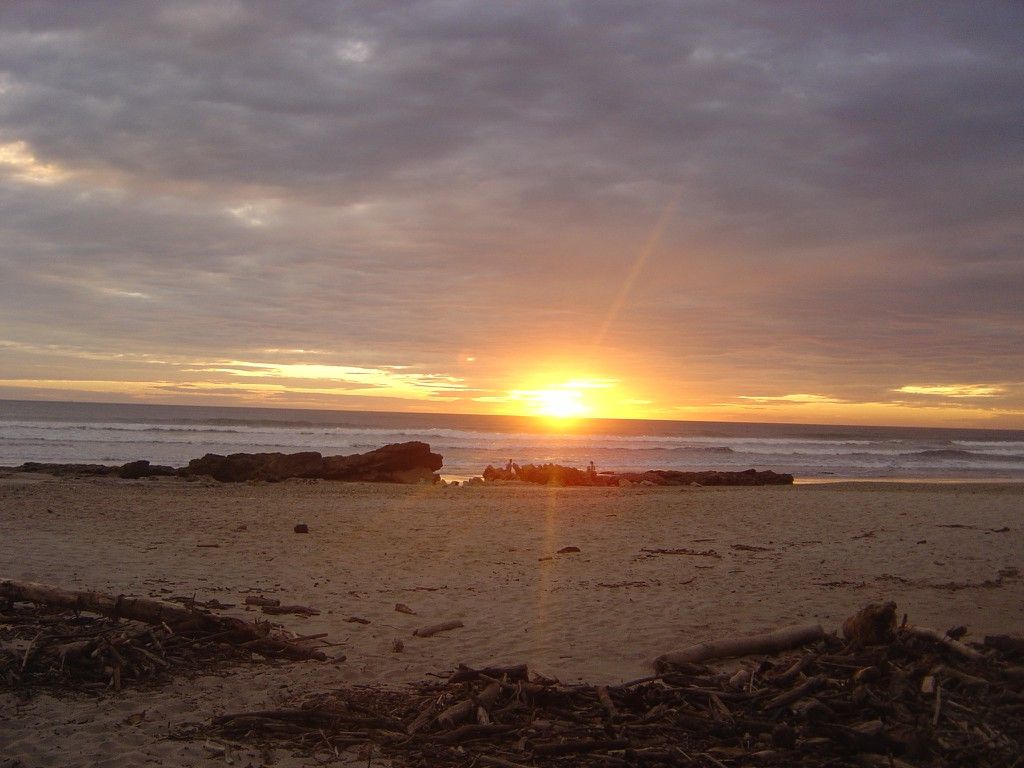
A coast built for waves
The Nicoya peninsula hangs off the northwest of Costa Rica into the Pacific, and its western shore faces straight into the swell. Long sandy beaches, rocky points and river mouths create a string of breaks, and the water stays warm enough to surf without a wetsuit all year.
Two areas draw most surfers. In the south, Santa Teresa and its neighbours, Playa Carmen and Mal País, offer a long stretch of beach breaks and reef sections. Further north, Nosara is known for Playa Guiones, a consistent beach break backed by a protected strip of forest where building near the sand is restricted. Both are busy and growing, and both still have dirt roads, monkeys in the trees and sunsets that empty the beaches of everything but surfers.
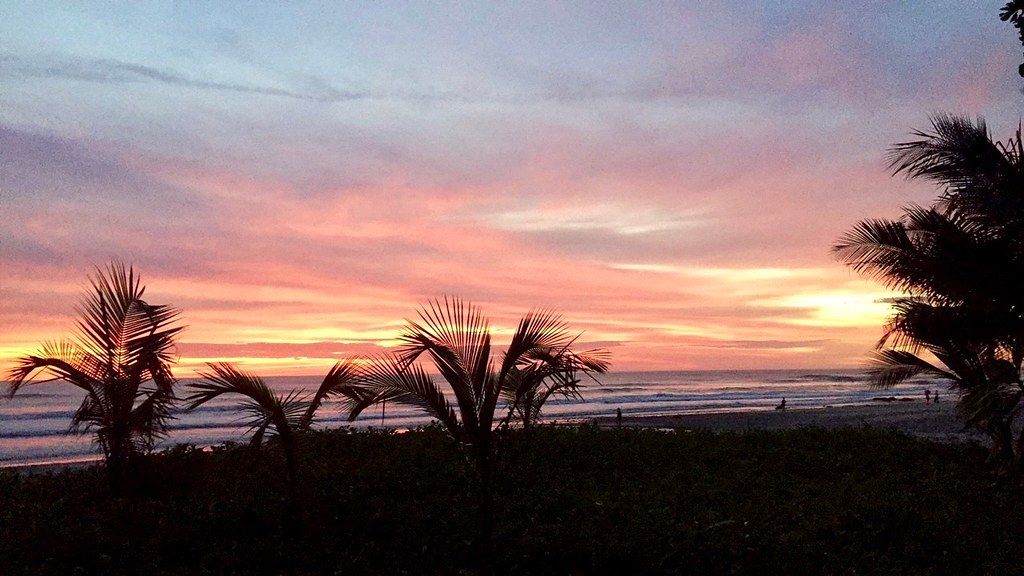
When the swell comes
Surf comes year-round, but the character changes with the seasons.
- Green season, roughly May to November: south swells from the southern hemisphere bring bigger and more consistent waves. Mornings are often clean, afternoons bring rain. September and October are the wettest months and the roads are at their worst.
- Dry season, roughly December to April: smaller swells on average, sunny days, and offshore winds that often groom the waves in the morning. This is the busiest time in the water and in town.
Tides matter as much as swell. Some sections work best on a rising or mid tide and close out or turn shallow at others. Check a tide table, ask what works where, and expect conditions to change through the day. For the bigger picture on rain and crowds, see the story on green season and dry season.
Rip currents and other hazards
Rip currents are the main danger on these beaches, for swimmers as much as for surfers. Many beaches have no lifeguards. Learn to spot a rip before you go in: a darker, calmer channel between breaking waves, foam or sand moving out to sea, or a gap where waves do not break.
If one takes you, stay calm and keep your board, which floats. Do not fight straight back toward the beach. Paddle parallel to the shore until you are out of the current, then come in on the whitewater. Swimmers without a board should float and signal for help, then swim sideways.
Other risks are easier to manage. Rocky and reef sections cut feet and skin, so booties help at some spots. A loose board is a weapon in a crowd, so use a leash and keep hold of your board. The midday sun burns fast on the water; surf early and late, and wear a rash guard. Small cuts get infected quickly in the heat, so clean them well. Never surf alone at an unfamiliar break, and stay out at dusk near river mouths, where crocodiles have been seen on this coast.
Learning, and learning respectfully
Santa Teresa and Nosara are both popular places to learn, with soft beach breaks on smaller days. Take lessons from certified instructors who explain safety and etiquette, not just how to stand up, and who keep beginners in the whitewater rather than pushing them out to the main peak.
The lineup has rules that matter everywhere, and matter more in a crowd:
- The surfer closest to the breaking part of the wave has priority.
- Do not drop in on someone who is already riding.
- Paddle around the lineup, not through the middle of it, and do not ditch your board in front of others.
- Take turns. Catching every wave is not a right, and a smile goes further than a shout.
- Know your level. If the peak is crowded with good surfers, find a quieter spot.
If you are learning, start on days with small, clean waves rather than the biggest swell of the week. Practise paddling and turtle-rolling in the whitewater, learn to fall flat and shallow with your arms over your head, and never dive off your board in shallow water.
Many local surfers grew up on these beaches. A respectful attitude, patience and a willingness to give waves away are the best way to be welcome in the water.
Beyond the surf
The peninsula is more than a surf strip. Near Nosara, Ostional National Wildlife Refuge protects a beach where olive ridley turtles nest, sometimes in mass arrivals of thousands of females over a few nights. Visits during nesting follow strict rules with local guides; read the story on watching wildlife without harming it first.
Howler monkeys call in the trees behind the beaches, and coastal dry forest turns brown in the dry season and green again with the rains. Walk at low tide to tide pools on the rocky points, but watch the incoming water and do not get cut off.
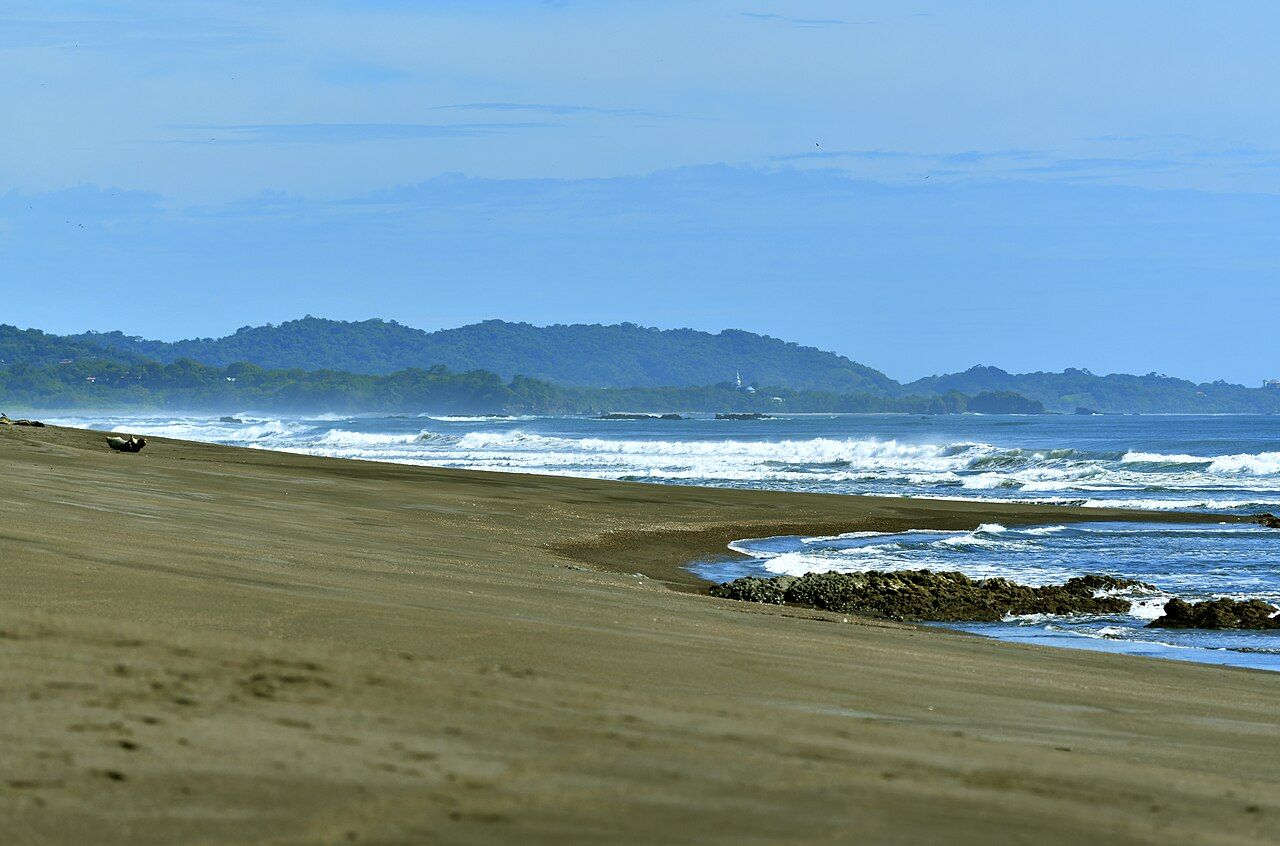
Into Santa Teresa
For Santa Teresa, the usual route from San José runs to the port of Puntarenas, across the Gulf of Nicoya by car ferry to Paquera, and then south on roads that turn to dirt near the coast. Nosara is reached from the north of the peninsula, by road through Nicoya town or along the coast. Small planes also serve both areas.
Roads around both towns are dusty in the dry season and muddy, potholed and sometimes cut by rivers in the wet months. A high-clearance vehicle helps, and some coastal routes need river crossings that are unsafe after heavy rain. Read up on driving and buses before you go.