
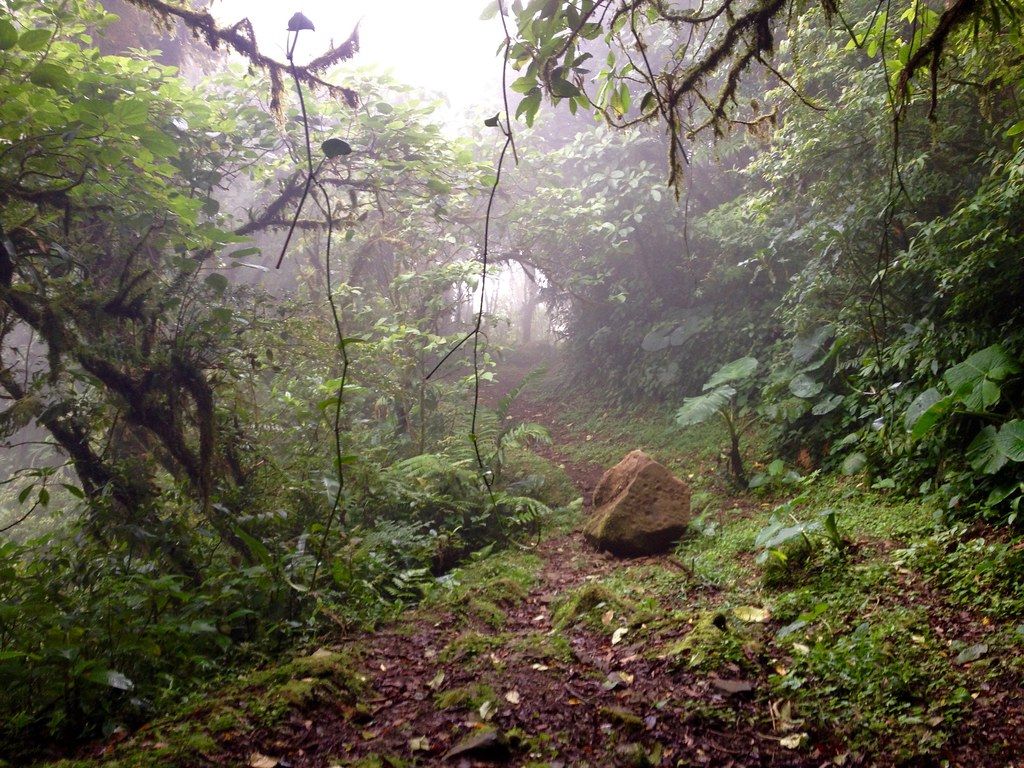
Living in the clouds
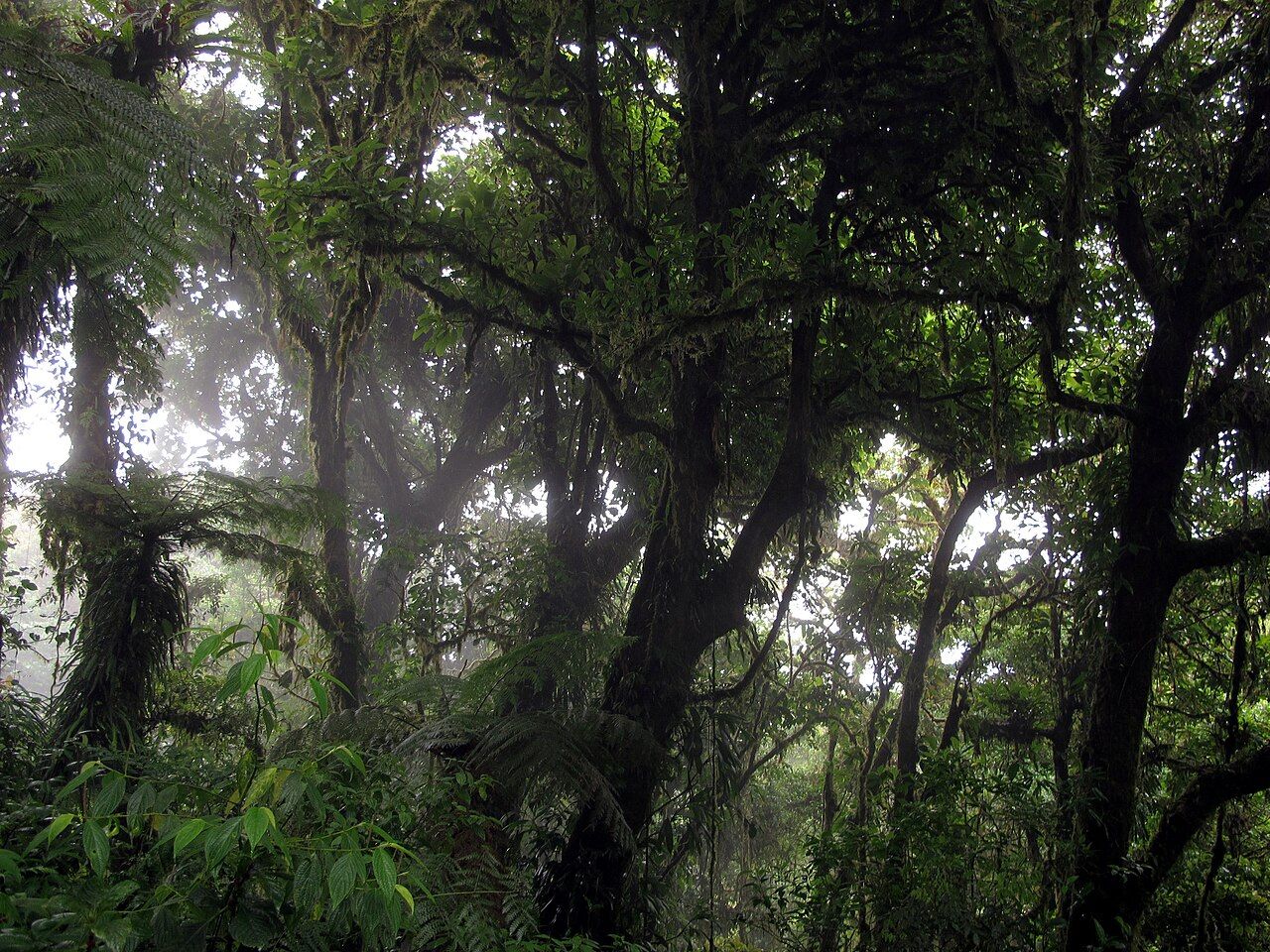
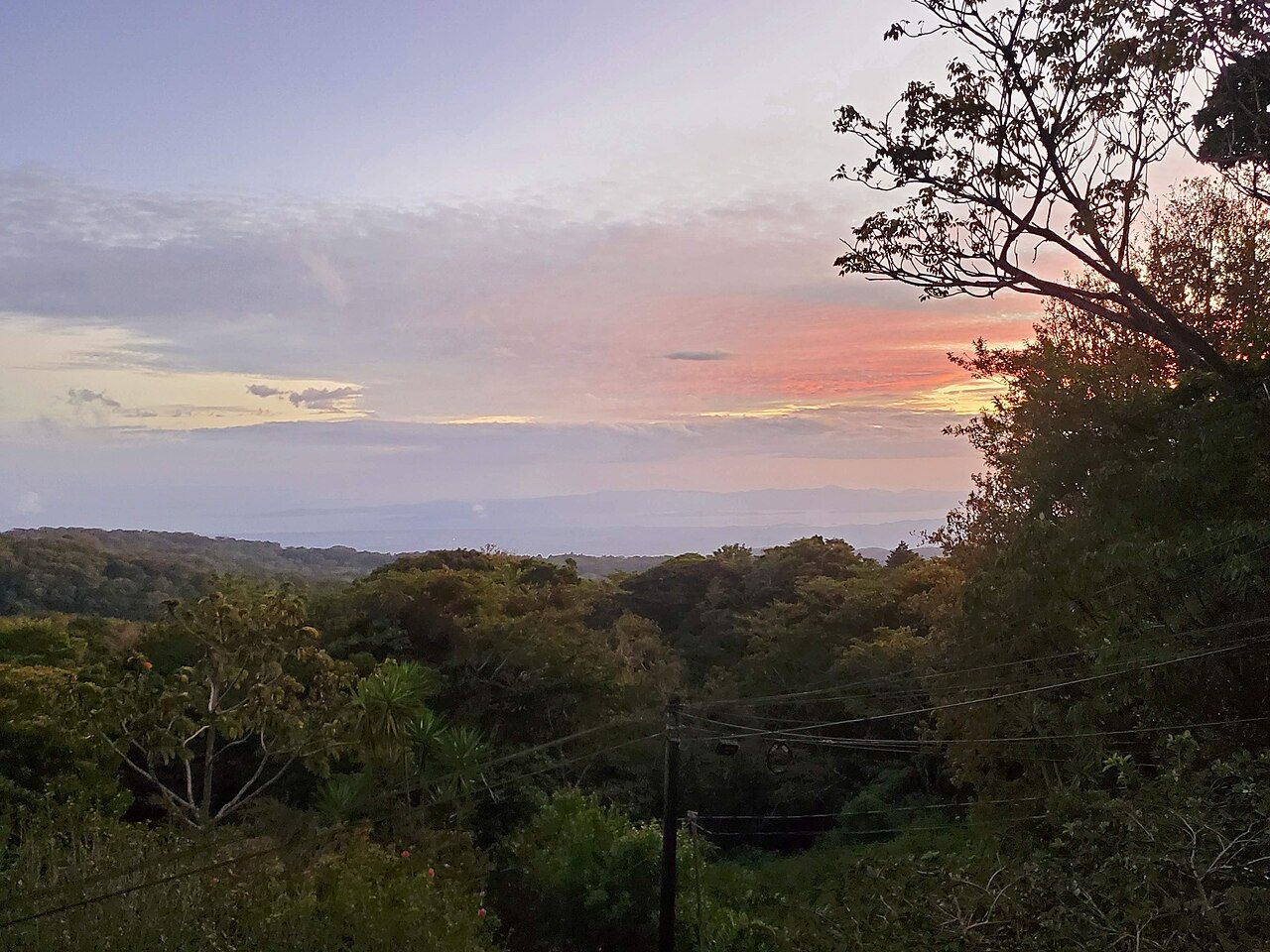
Monteverde sits high in the Tilarán mountains, on the ridge that divides the Caribbean slope from the Pacific. Trade winds push moist air up the Caribbean side, and as it cools it turns to cloud that blows across the ridge and through the trees. The forest drinks that mist directly. Mosses, ferns, bromeliads and orchids cover every branch, and the trees drip even on days without rain.
The result is cloud forest, one of the most diverse habitats in the country and one of the most fragile. It is also cool. Temperatures are far lower than on the coasts, and wind and mist make it feel colder still.
The community of Monteverde was founded in the early 1950s by a group of Quakers from the United States, who set aside part of the forest above their farms to protect the watershed. Over time, that protected forest grew into a network of reserves, and the nearby town of Santa Elena became the area's main base for visitors.
Dairy farming and cheese-making were part of the early community's life, and pasture still covers the lower slopes below the forest. The contrast is a useful lesson in itself. Where the trees remain, the slopes hold water and soil; where they were cleared, the wind dries the land. Reforestation projects on old farmland have been reconnecting forest patches, giving birds and mammals more room to move between the slopes.
The reserves
Several protected areas share these mountains, each with its own character.
- Monteverde Cloud Forest Reserve: the best known, with a well-marked trail network through classic cloud forest along the divide.
- Santa Elena Cloud Forest Reserve: a community reserve a little higher and wetter, usually quieter, run for the benefit of the local community.
- Children's Eternal Rainforest: a large private reserve started with money raised by schoolchildren around the world, covering forest on both slopes.
There are also smaller private reserves and forest patches around town, some of them excellent for birding. Visitor numbers are limited in some places, and the main trails are busiest in the late morning.
Stay on marked trails. Cloud forest soils are thin and easily eroded, and stepping off the path damages roots and plants that take years to recover. Trails are often muddy and slippery, so wear shoes with real grip.
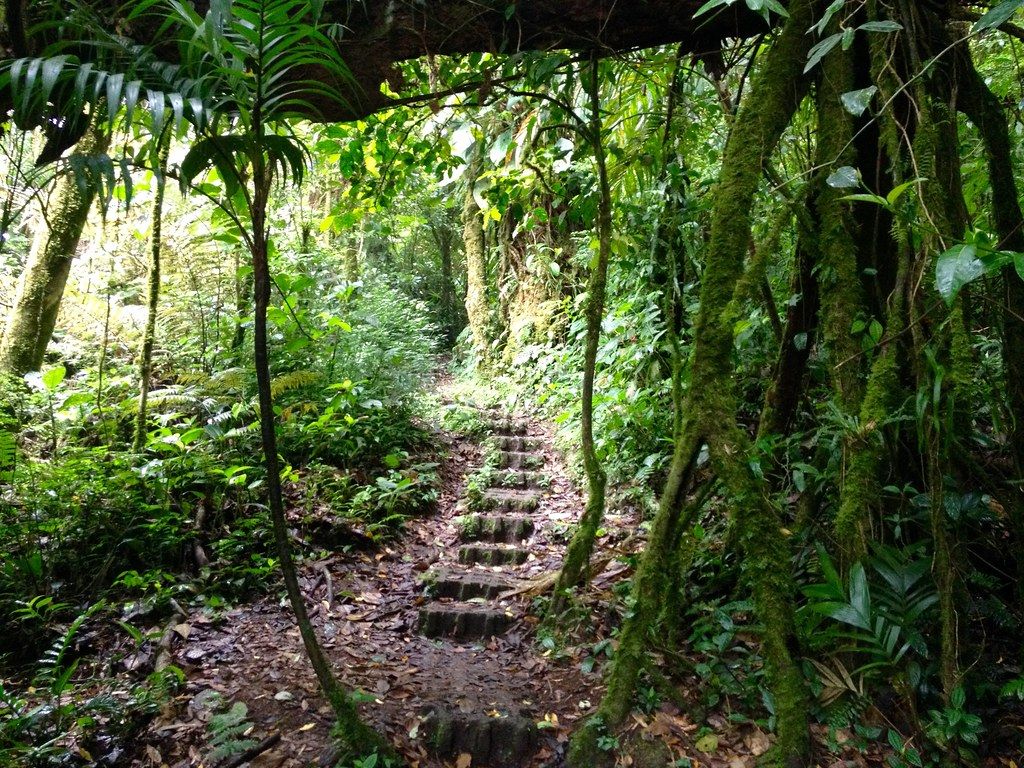
A guided walk in the early morning is worth it at least once. Naturalist guides carry spotting scopes, know the calls and the fruiting trees, and can turn a green blur into a forest full of detail. After that, walking the same trails on your own makes much more sense. Go slowly: the cloud forest hides its life in the epiphytes, the leaf litter and the canopy, and most of it reveals itself only to people who stop and look.
Looking for the quetzal
The resplendent quetzal is the bird many visitors come for. Males have shimmering green feathers, a red belly and long tail streamers that trail behind them in flight. Quetzals feed heavily on small wild avocados and other fruits of the laurel family, and they move up and down the mountain as different trees come into fruit.
They are easiest to see during the breeding season, roughly from March to June, when pairs nest in holes in dead trunks. A local guide who knows which trees are fruiting will greatly improve your chances. If you find a nest, keep a long distance, stay quiet and leave quickly. Crowds and noise near nests can make parents abandon them.
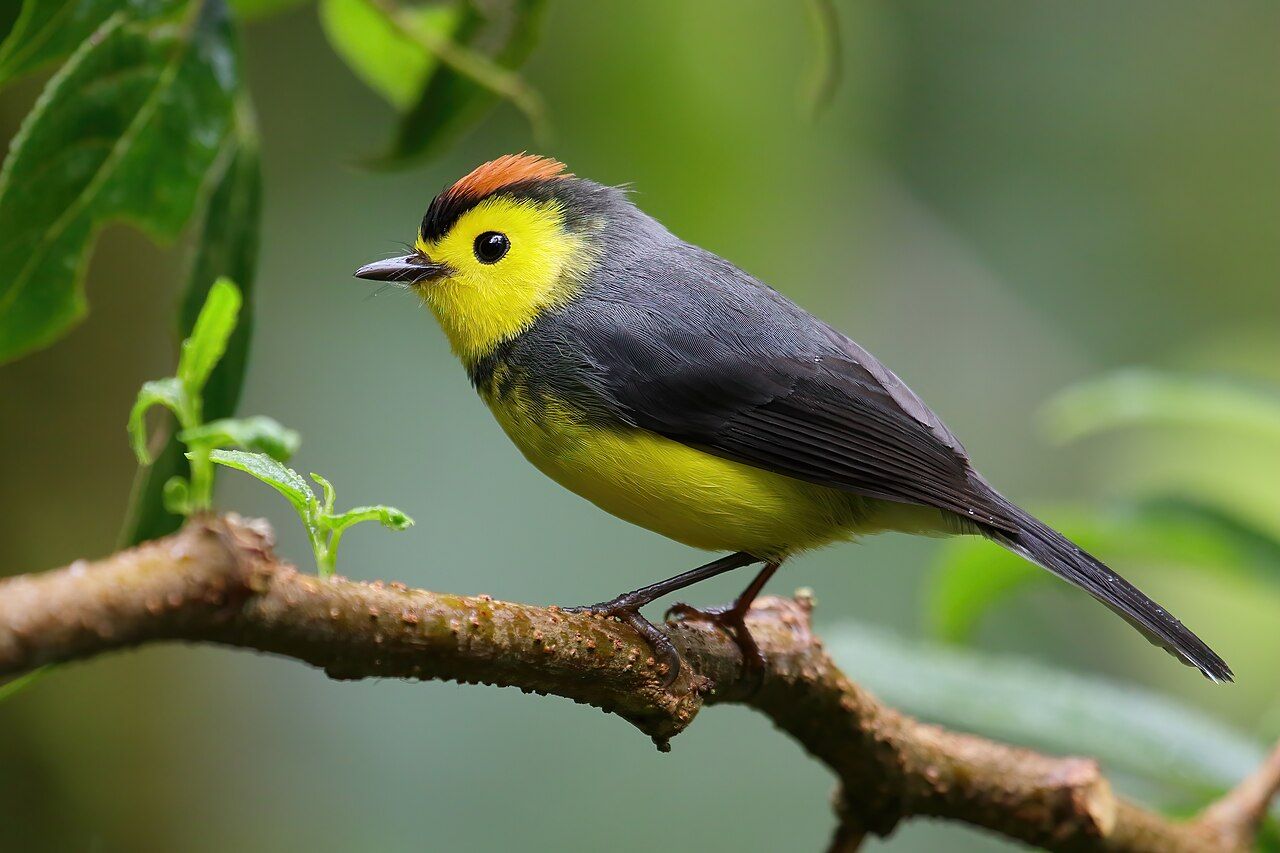
Quetzals are far from the only reward. Listen for the strange, metallic call of the three-wattled bellbird, watch hummingbirds of many species, and look for emerald toucanets, black guans and mixed flocks of small birds moving through the canopy.
Monteverde is also a place to remember what has been lost. The golden toad, a brilliant orange species known only from these mountains, has not been seen since 1989 and is considered extinct. Climate shifts and disease are thought to have played a part, and its loss turned the area into a focus for research on amphibian decline.
Bridges, towers and the canopy
Much of cloud forest life happens high above the ground, out of sight from the trail. Hanging bridges, suspended walkways that cross ravines at canopy level, let you look into the crowns of trees, see epiphytes up close and watch birds at eye level. Several private parks around Monteverde offer them.
Zip lines are popular here too, but they suit thrill-seeking more than wildlife watching. Birders get more from slow walks on bridges or trails. If you choose a canopy tour, pick one by its safety record, equipment and staff training rather than by price. The story on canopy, zip lines and hanging bridges explains what to look for.
The forest drinks that mist directly.
After dark
The cloud forest changes at night. Guided night walks run in reserves and private forest around town, and they reveal animals you rarely see by day: tarantulas waiting at burrow entrances, stick insects, tree frogs, sleeping birds, two-toed sloths, and sometimes kinkajous or olingos moving through the branches.
Good night walks are quiet and slow. Use a dim light, ideally red, and avoid shining bright beams into animals' eyes. Do not touch frogs, insects or anything else; many are fragile, and some can bite or sting. Never try to bring animals closer for a photo. Groups should be small, and a good guide will move on rather than crowd an animal that is feeding or trying to hide. Wear closed shoes and long trousers, carry a rain layer, and expect the walk to cover only a short distance: the point is to look, not to hike. More advice is in the story on watching wildlife without harming it.
Wind, mist and getting there
From roughly December to March, strong trade winds sweep across the divide, especially on exposed ridges and lookouts. Days can swing from bright sun to blowing cloud and drizzle within minutes. The rainy months, roughly May to November, bring heavier rain on the Pacific side, and trails turn muddy. There is no wrong time to visit, only different conditions to dress for.
Pack a fleece or warm layer, a waterproof jacket and a cover for your bag. Nights in town are cool, and on the high trails it can feel cold even at midday.
The main approach climbs from the Inter-American Highway on a steep, winding mountain road, now paved for most of the way. Other routes from the north are rougher. Public buses run from San José to Santa Elena, and shared shuttles link Monteverde with other parts of the country. If you drive, allow extra time for fog and curves, and read up on driving and buses first.