
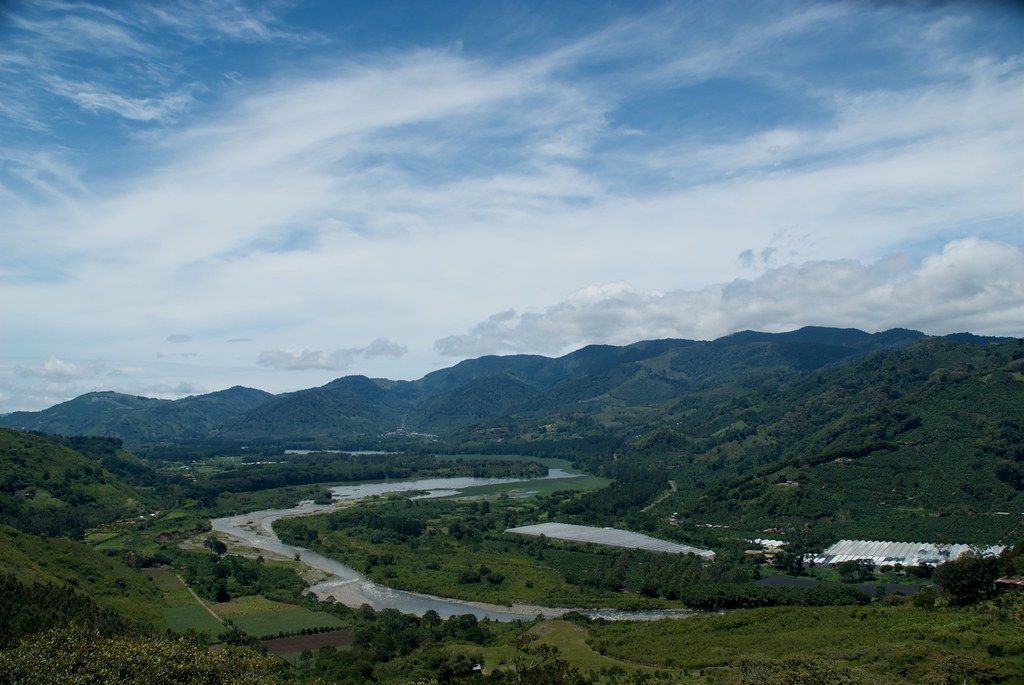
Drop over the ridge southeast of Cartago and the land falls away into the Orosi valley, a deep green bowl of coffee rows, shade trees and small towns beside the water. It ranks among the easiest day trips from San José and one of the most rewarding: an old church still in use, ruins beside a reservoir, a loop road with views at every bend and, at the head of the valley, one of the wettest forests in the country.
A valley built on coffee
Coffee shaped this valley. Rows of shrubs climb the slopes under taller shade trees, and in the harvest months, roughly the end of the year into the first months of the next, pickers work the hillsides with baskets at their waists while trucks gather the red cherries at the roadside. The rest of the year the farms are quieter, but the patchwork of greens is the same.
If a farm on the valley floor invites visitors to see how coffee is grown and processed, it is worth an hour: the walk through the rows, the drying patios and the roasting explain a crop that shaped the whole country. Bring cash for small purchases, as not every place takes cards.
The Reventazón and its tributaries drain the valley, and a dam downstream holds back the Cachí reservoir, which spreads between the hills on the valley's eastern side. Mist often hangs in the bottoms early in the morning and burns off by mid-morning in the dry months.
The church at Orosi
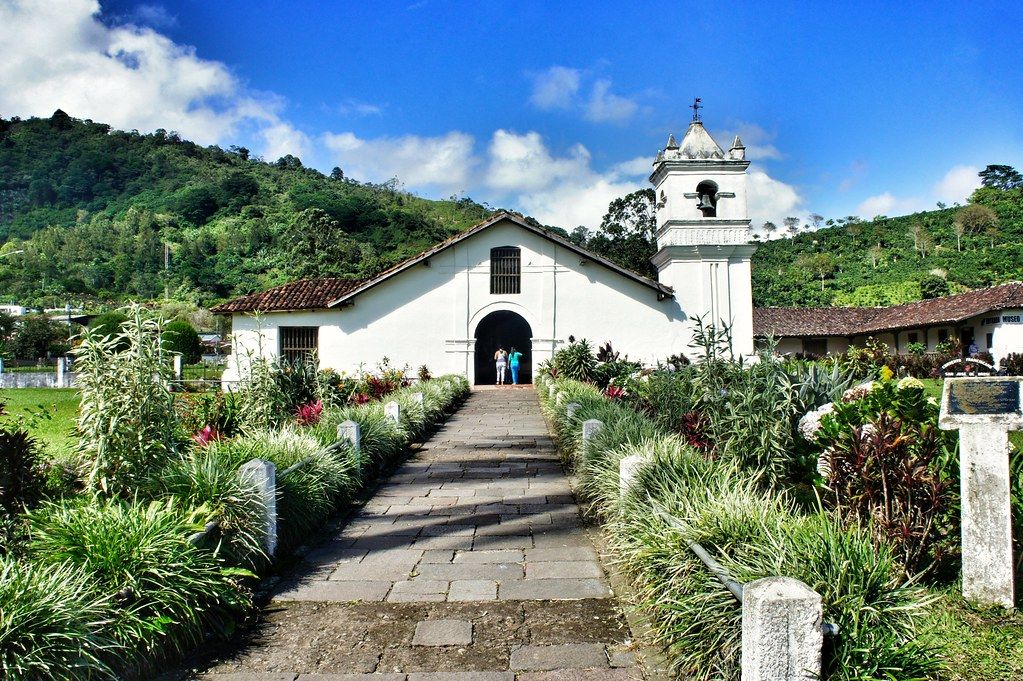
In the town of Orosi stands a whitewashed colonial church with a red tile roof and a simple bell tower, built by Franciscan missionaries in the eighteenth century. It is widely described as the oldest church in the country still used for worship, and it has come through centuries of earthquakes that destroyed many younger buildings. Inside, the wooden altar pieces and old religious paintings are worth a slow look.
A small museum of religious art sits beside it. If a service is going on, step quietly, dress modestly and save photos for later.
The ruins of Ujarrás and the reservoir loop
The road around the valley makes a loop of a few dozen kilometres through Orosi, along the Cachí reservoir and back by Paraíso. On the way sit the ruins of the church at Ujarrás, built of stone in the late seventeenth century. Repeated floods and earthquakes eventually drove the town's people to resettle higher up in the nineteenth century, and the church was abandoned. Its roofless walls now stand in a tidy park among tall trees, often with families picnicking on the grass.
The grounds are open to wander during the day. Read the small signs about the town's history, and treat the walls with care: no climbing and no scratched initials.
The loop is a gentle drive or a long, hilly bike ride, with viewpoints over the reservoir and the coffee slopes. Some stretches are narrow and curvy, with buses and trucks coming the other way; go slowly, and see driving and buses for the habits of mountain roads. Local buses connect Cartago with Paraíso and Orosi if you would rather not drive.
Tapantí: forest in the rain
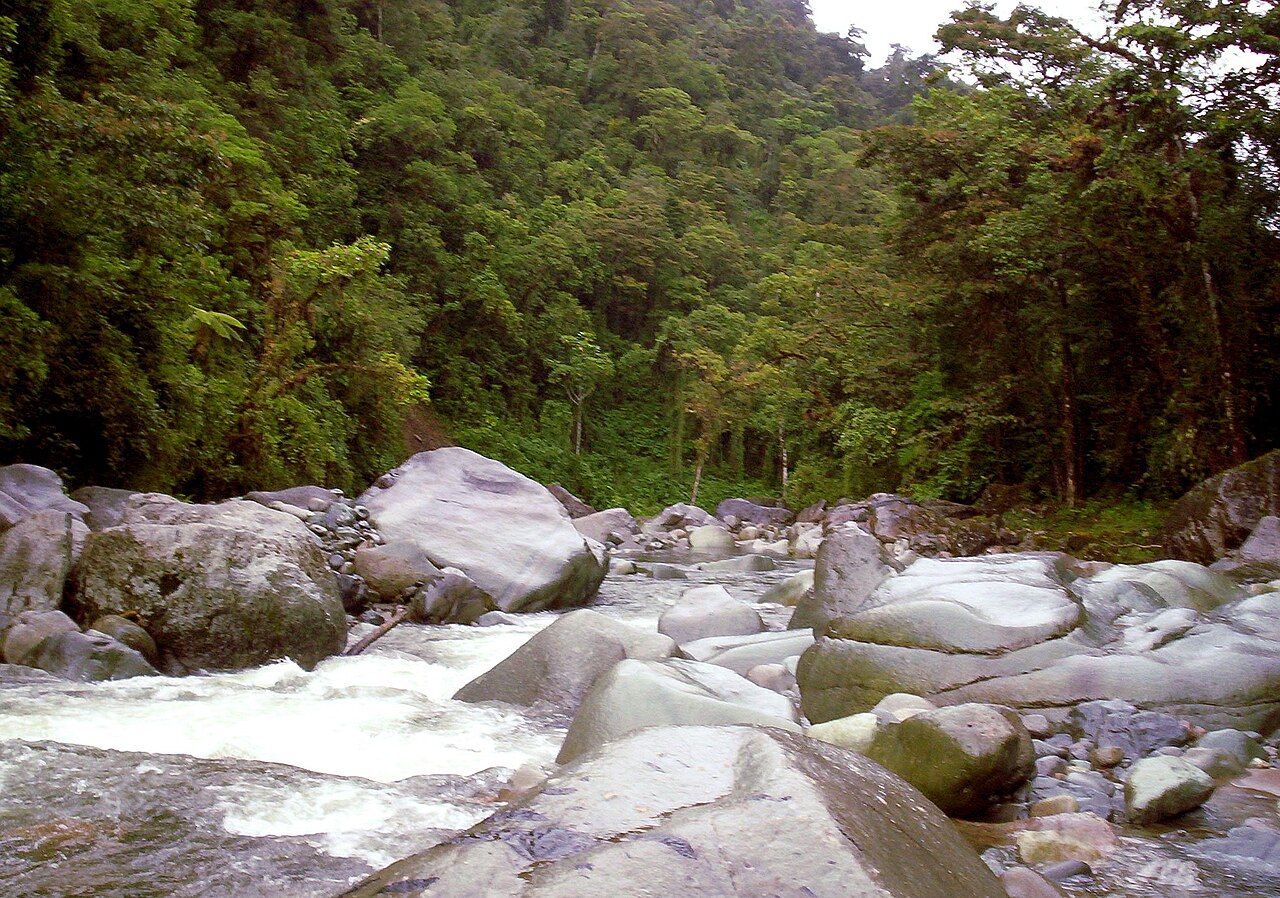
At the head of the valley, past the last farms, the road enters Tapantí National Park, which protects a steep block of montane rainforest on the northern edge of the Talamanca range. Few places in Costa Rica get more rain, several metres of it a year, and it shows: rivers run loud and clear between mossy boulders, waterfalls drop from the ridges, and nearly every surface is green.
The trails are short and well marked, climbing through forest to viewpoints and down to the river. They are also slick, so wear shoes with grip and use handrails where they exist. Rivers here rise quickly after rain; enjoy them from the bank and never try to cross. Hours and trail openings vary; confirm them before the trip.
Birding is the main draw for many visitors. The park holds a long list of highland species, and early mornings along the access road can be busy with tanagers, hummingbirds and, with luck, a quetzal. Bring binoculars and patience, and keep voices low.
Look for small things too. Mosses, lichens, orchids and ferns cover branches and banks, and after rain the trailside streams fill with tiny frogs and darting insects. A hand lens is a surprisingly good companion here.
Tapantí's forest continues south into the high country that rises toward the Cerro de la Muerte and, further on, the peaks described in Climbing Chirripó. The scale of protected land here is one of the reasons the valley stays so green.
Warm springs, timing and a full day
The town of Orosi has warm springs where locals and visitors soak, a pleasant end to a damp day in Tapantí. Simple places to eat line the main road, and many serve coffee grown a few hundred metres away.
Views are clearest from about December to April, but the valley is rewarding in any month. In the green season, plan the forest for the morning and the drive for the afternoon, when the rain usually arrives. More on the pattern is in green season and dry season.
A full day might run like this: Tapantí at opening, the church at Orosi before lunch, the reservoir loop and Ujarrás in the early afternoon, and back over the ridge to Cartago before dark. Irazú's crater, a short drive north of Cartago, makes a fine first stop if you start very early.