
A small park with a big reputation
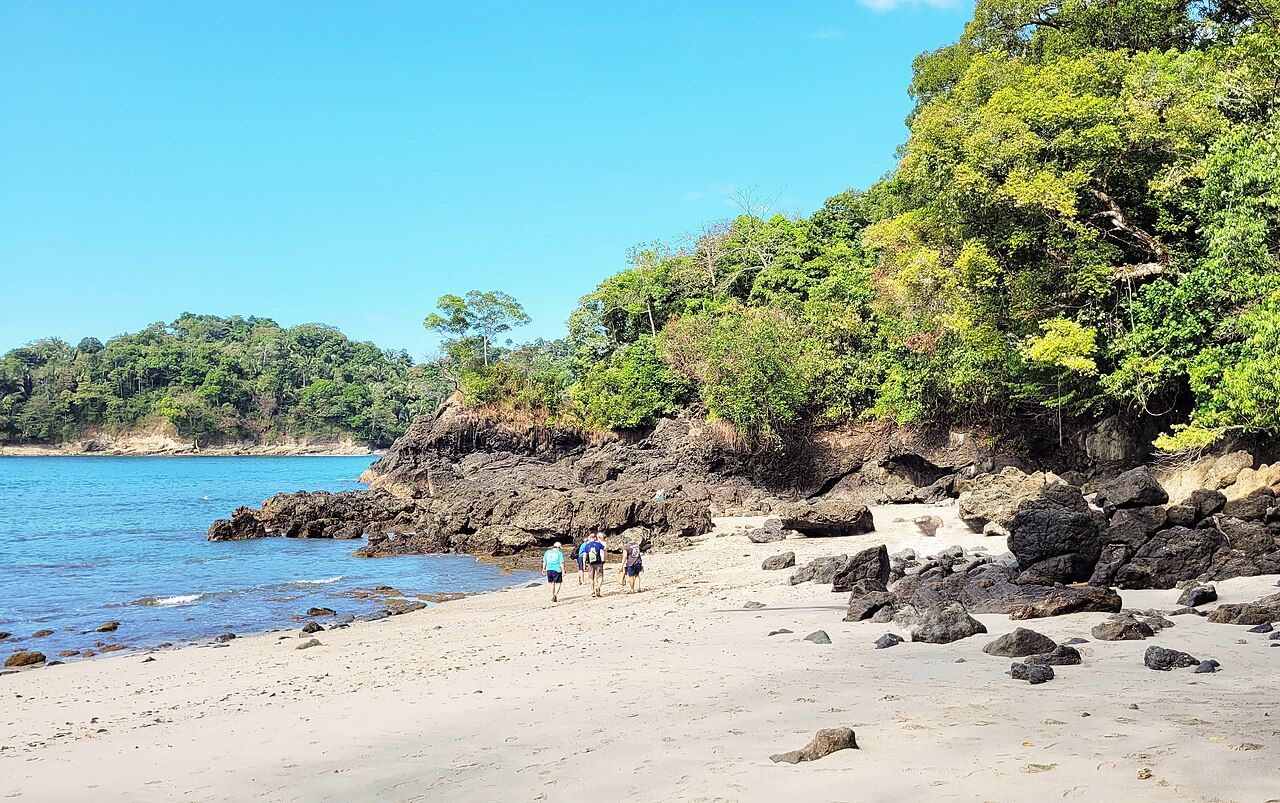
Manuel Antonio, on the central Pacific coast just south of the town of Quepos, is one of the smallest national parks in Costa Rica and one of the most visited. Its appeal is easy to understand. Within a short walk of the entrance, rainforest runs straight down to sheltered white-sand beaches, and monkeys, sloths and iguanas live in the trees above them.
That popularity brings crowds. The park protects a narrow strip of coast and forest, and the hillside road between Quepos and the park entrance is lined with development. Coming here with realistic expectations, and at the right time of day, makes for a far better visit.
The park is small enough to walk in a morning, but it rewards slowness more than distance. Sitting quietly near the edge of a beach for half an hour often brings more wildlife than marching every trail. Capuchins drift through the trees above the sand, iguanas sun themselves on rocks, and in calmer coves you can watch fish in the shallows from the water's edge.
Entry limits, closed days and rules
To protect the park, the number of daily visitors is capped, and the park closes one day each week. Tickets are generally sold online in advance rather than at the gate, and on busy days they sell out.
Rules on what you can carry in are strict, and bags are checked at the entrance. Many packaged snacks, disposable plastics, alcohol and smoking are not allowed, partly because monkeys and raccoons have learned to raid bags. Bring water in a refillable bottle and only the food the current rules permit.
- Arrive early, ideally at opening time, with your ticket ready.
- Leave valuables behind; beaches are not secure places to leave bags.
- Wear shoes that can handle a few steep, rocky sections.
Sloths, monkeys and the rest
The park's wildlife is used to people, which makes it easy to see and easy to harm. White-faced capuchins move in noisy troops and will grab unattended food. Central American squirrel monkeys, small and orange-backed, live only on this stretch of the Pacific coast. Mantled howler monkeys call at dawn. Both two-toed and three-toed sloths live here, usually as a still shape high in a tree.
Spotting sloths without help is hard. Certified naturalist guides work at the entrance with spotting scopes and can show you animals you would walk past. Choose guides who carry official identification, and be wary of anyone on the road outside who presses you to hire them.
Whatever you see, the rules are the same:
- Never feed any animal. Human food makes monkeys sick and aggressive, and fed animals lose their fear of people.
- Keep your distance, even when an animal comes close to you.
- Never touch or hold a sloth, and do not pay anyone who offers you one to hold, inside or outside the park.
- Do not block a path that animals are crossing.
The story on watching wildlife without harming it covers these points in more detail.
The beaches and the trails
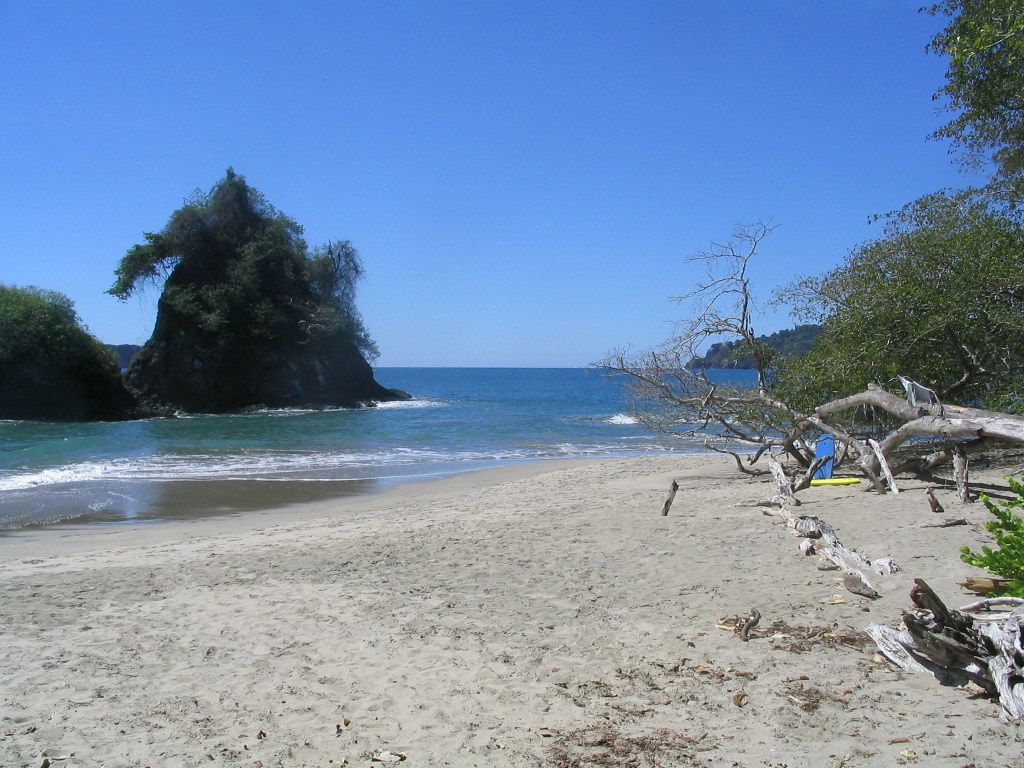
A wide, flat main trail leads from the entrance toward the beaches, with side trails climbing through the forest. Playa Manuel Antonio, a sheltered cove with calm water on most days, is the favourite for swimming. Playa Espadilla Sur is longer and more open. A loop trail climbs around Punta Catedral, a forested headland that was once an island and is now joined to the shore by a sandbar, with lookouts over the sea.
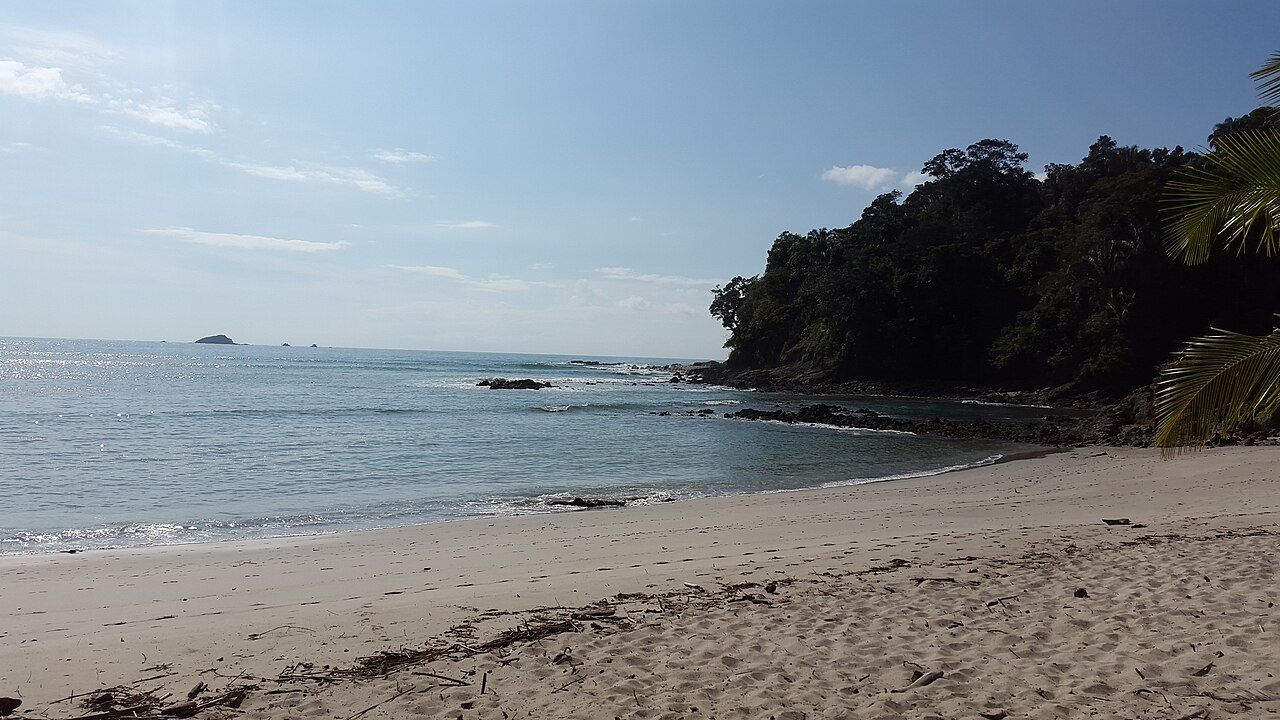
Swim only where the water is calm and others are swimming, and stay out when the surf is up. Outside the park, the long public beach of Playa Espadilla has strong rip currents on many days and lifeguard cover is not guaranteed. If you are caught in a rip, do not swim against it: float, then swim parallel to the shore until you are free, and signal for help.
The sun is fierce here. Use shade during the middle of the day, reapply sunscreen after swimming, and drink often.
Leave the beaches as you found them. Do not stack rocks, pick up shells or carve into trees, and take every wrapper and bottle back out with you. Ghost crabs and hermit crabs live in the sand and under the leaf litter at the forest edge, so watch your feet. Some areas of the park are closed for recovery or research from time to time; respect the signs and the rangers.
Busy and quiet times
The dry season, roughly December to April, brings sunny days and the biggest crowds, especially around holidays. The green season brings afternoon rain, fewer people and a greener forest; mornings are often clear. For the pattern on each coast, see the story on green season and dry season.
Whatever the month, the first hours after opening are best. The light is softer, animals are more active, and the beaches are quiet. By late morning, tour groups fill the main trail and the heat builds.
The road to Manuel Antonio
Quepos is about three hours from San José by road, mostly on the coastal highway. Public buses run from the capital to Quepos, and local buses connect Quepos with the park entrance. Drivers should use official parking and never leave anything visible in a car. More on the roads is in the story on driving and buses in Costa Rica.
Manuel Antonio works well as a short visit along the Pacific coast, but do not try to see the whole park in a rush. Pick a beach, walk one loop slowly, and leave space for the animals to show themselves.