
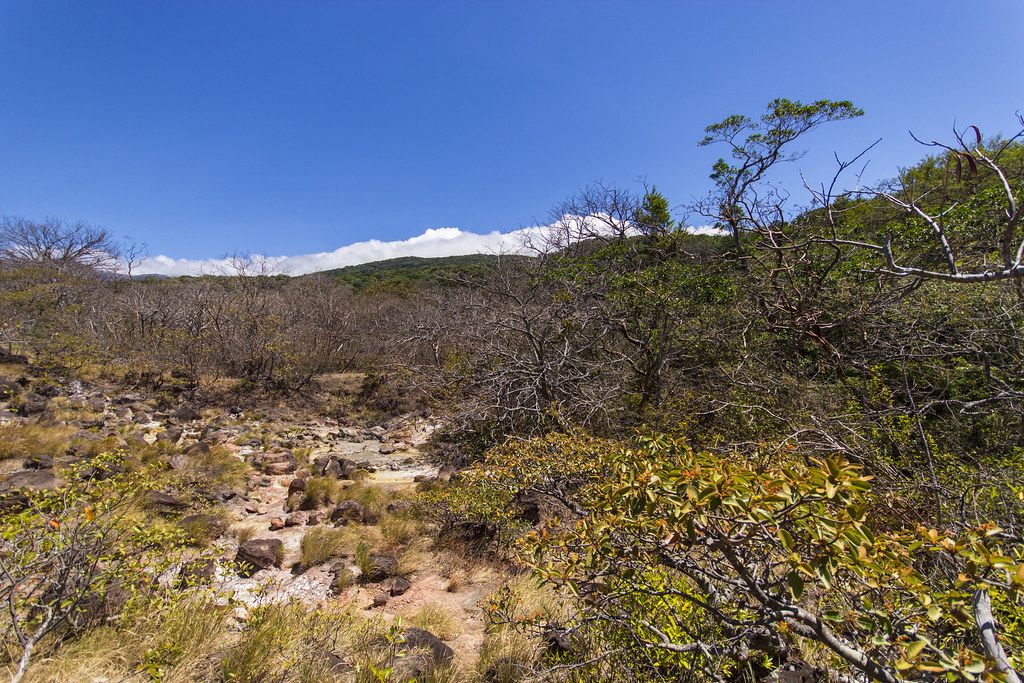
Rincón de la Vieja is a broad, restless volcano rising above the plains of Guanacaste, close enough to Liberia that you can drive to its trailheads in about an hour. Its summit crater is off-limits, but on the lower slopes the heat leaks out in bubbling mud, hissing vents and warm springs, all set in one of the most interesting dry forests in the country.
A volcano that does not sit still
The mountain is really a cluster of craters along a ridge, with an active crater holding an acidic lake near the top. Since around 2011 it has produced frequent small eruptions, mostly bursts of steam, gas, mud and ash rather than flowing lava. They can come with little warning, and some have sent mudflows down nearby rivers.
Because of that, the long trail to the summit has been closed for years, and access to other trails changes with the volcano's mood. Park staff and scientists watch it closely. Before you go, check whether the park is open, which sectors are operating and which trails are allowed that day. Obey any closure on the ground, even if the path looks quiet.
Las Pailas: mud pots and fumaroles
The busiest part of the park, the Las Pailas sector, has a loop trail of a few kilometres that packs in the geothermal features. Pailas are cooking pots, and the name fits: grey mud blips and spits in shallow basins, fumaroles hiss steam that smells strongly of sulphur, and in one spot a small vent puffs away like a miniature volcano.
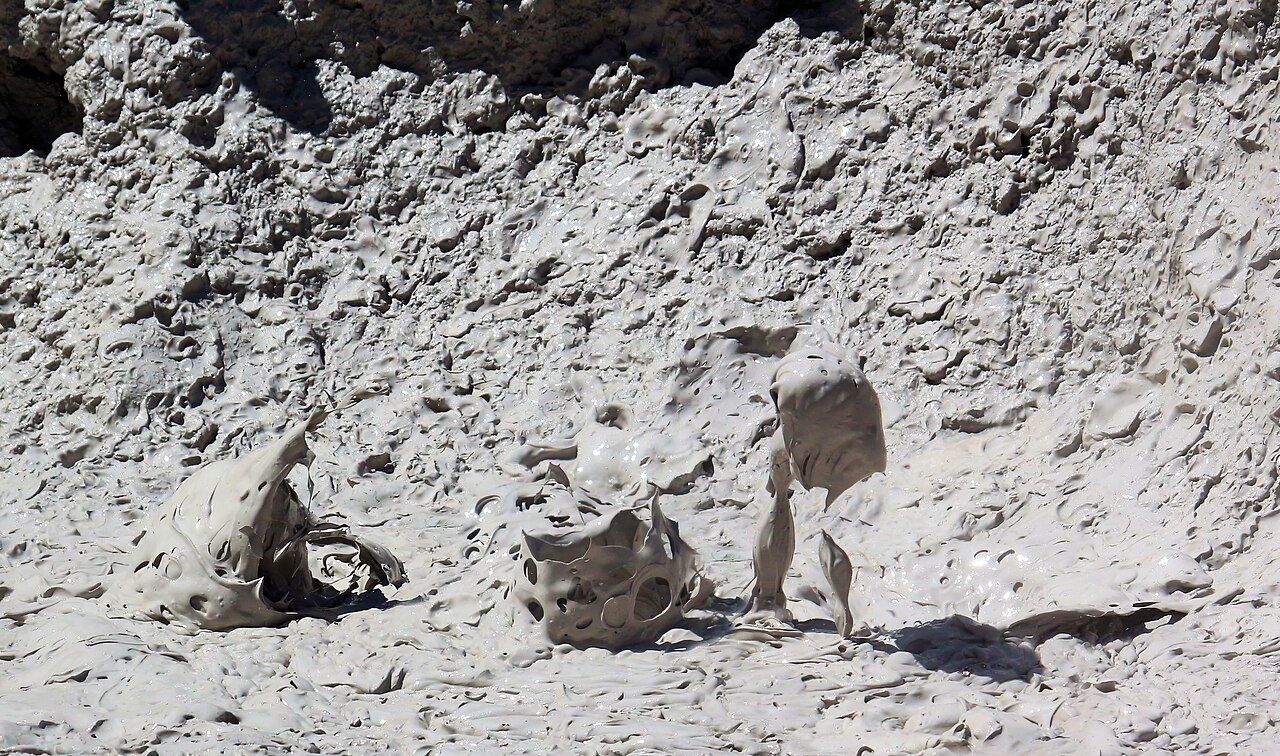
The safety rule is simple and absolute: stay on the marked path. The ground near the pots can be a thin crust over boiling water, and people have been burned by stepping off the trail for a closer photo. Keep children by the hand, keep dogs at home, and do not touch the mud or the water. If the gas makes your eyes or throat sting, move on.
Along the same loop you pass through shaded forest, cross small streams and come out on open ground where the heat has stunted the plants. Start early: the sun is fierce by late morning, and animals are more active in the cool hours.
Allow a couple of hours to walk the loop properly, stopping at each feature rather than rushing to the next. Toilets, water and information are near the entrance, and there is little else once you set out, so fill bottles before you start.
The dry forest and what lives in it
Much of Guanacaste was once covered by tropical dry forest, most of it later cleared for cattle. Here it survives, and it behaves differently from rainforest. In the dry months many trees drop their leaves, the canopy thins, and the forest floor rustles underfoot. When the rains return the whole slope turns green within weeks.
That seasonal thinning makes wildlife easier to spot. Howler monkeys and white-faced capuchins move through the branches, coatis forage in groups, and motmots perch with their pendulum tails swinging. The broad-crowned guanacaste tree, the national tree, grows on the surrounding plains. Keep your distance from all of it and never offer food; the reasons are set out in watching wildlife without harming it.
The park forms part of a wider conservation area in the northwest that has been recognised as a World Heritage site for its dry forest and the way it links habitats from the mountains to the sea.
Waterfalls, pools and the Santa María side
Longer trails from Las Pailas lead to waterfalls in the forest, including one that drops into a striking blue pool. These walks run to several hours return, with stream crossings and little shade on parts of the way. Carry plenty of water, at least two litres each, and turn back if afternoon storms build, because streams rise fast.
The quieter Santa María sector, reached by a rougher road, has forest trails and warm springs near the old ranch buildings. It sees fewer visitors and suits slow walkers and birders.
Outside the park, the land around the volcano holds many warm springs on private property. If you visit one, follow the operator's rules on water temperature and time in the pools.
Timing and getting there
Guanacaste is the driest region in the country. Between December and April expect clear skies, hot middays and dusty roads, while the green months bring afternoon storms and a lush forest. The trade-offs are covered in green season and dry season.
Heat is the hazard people underestimate here. Midday temperatures in the dry season are high, shade on the open stretches is scarce, and the mud pots add their own warmth. Walk early, drink before you are thirsty, wear a hat and rest in the forest sections. Dizziness, nausea or a pounding headache are signs of heat exhaustion: stop, cool down and head back.
Liberia has an international airport and good road links, and the access roads to both park sectors leave the Interamericana north of town. The last stretches can be gravel and rough, so check conditions and read driving and buses if you plan to drive. Public transport to the park entrances is limited.
The volcano pairs well with the other high ground of the north. Tenorio and its blue river lie a couple of hours to the southeast, and Arenal is a half-day drive. For a first visit, pick one sector, arrive when the gates open, and give the mud pots your full attention without stepping off the path.